

Foundations and movement awareness
Typical ages: 5–7 years, depending on readiness
Students are introduced to the structure of a ballet class and learn basic movement vocabulary, body alignment, and the relationship between music and movement. The emphasis is on developing confidence, coordination, and correct habits in a positive learning environment.
Curriculum
Barre: Introduction to first and second positions of the feet, demi-plié, tendu, relevé, and basic port de bras.
Center work: Basic positions of the arms and feet, simple balance exercises, walking patterns, and introductory adagio movements.
Locomotor skills: Skipping, chassé, galloping, simple runs, and traveling combinations.
Jumps: Introduction to sauté in first and second positions, focusing on safe takeoff and landing.
Musicality: Identifying the beat, moving to different tempos, and responding to musical phrasing.
Posture and alignment: Developing an upright torso, appropriate turnout from the hips, and awareness of the feet and knees.
Artistry: Learning to use facial expression, imagination, and spatial awareness.
Learning outcomes: Students can identify basic ballet positions, follow class instructions, perform simple movement combinations, and demonstrate safe alignment.
Saturdays 10:15-11am
Level I
Dress Code:
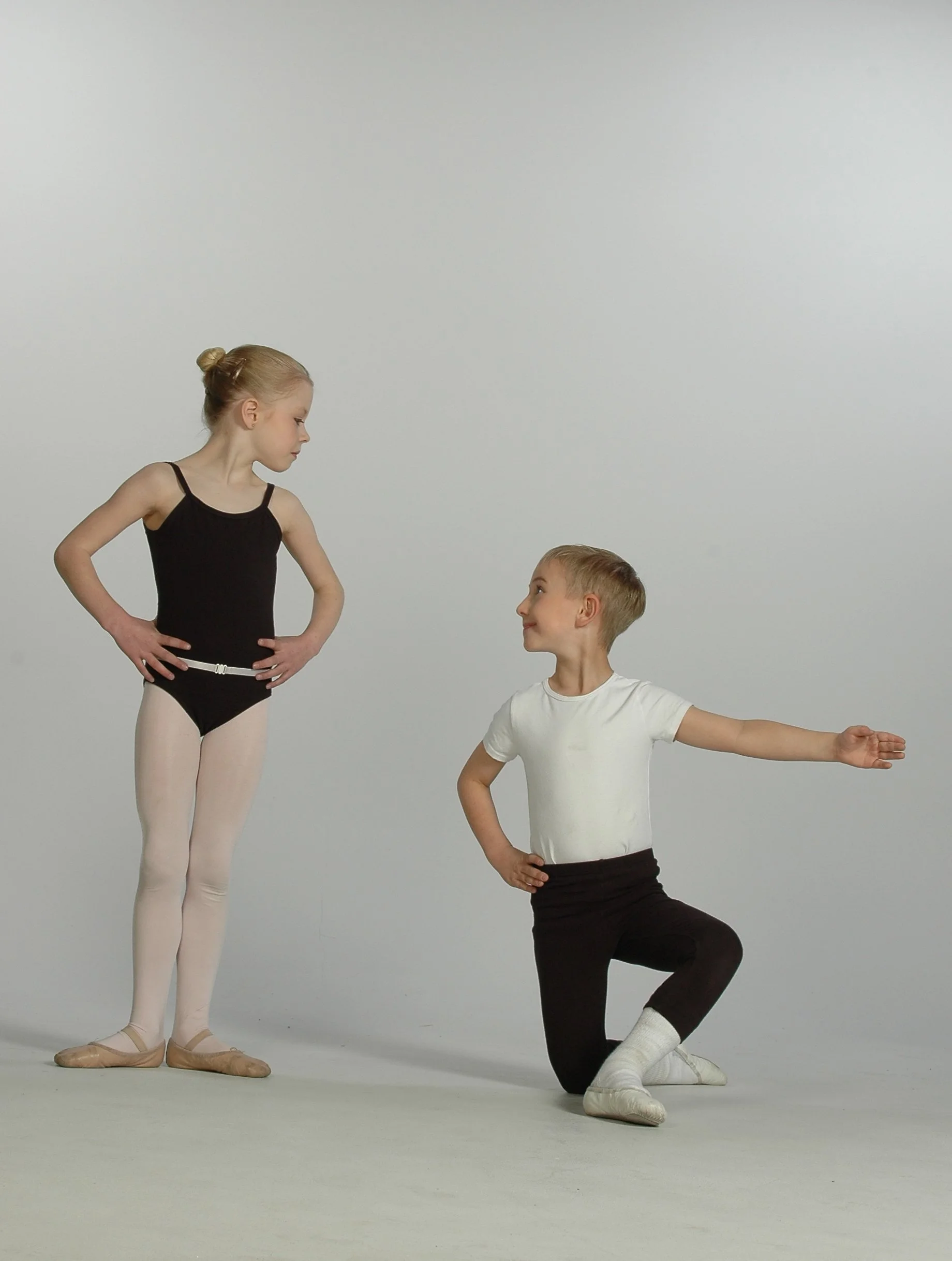
Pale Pink leotard (any style)
Pink footed tights
Pink full sole or split sole — leather or canvas ballet flats
Pink or white wrap skirt (optional)
Nude leotard for performances (optional)
Visit our partners at Eurotard Dancewear for all your dance wear needs!
Level II
Typical ages: 6–8 years, depending on readiness
Students strengthen foundational skills and begin combining familiar steps into short, structured exercises. Greater attention is given to precision, balance, posture, and movement transitions.
Curriculum
Barre: Demi-plié, battement tendu, battement dégagé, rond de jambe à terre, fondu introduction, relevé, and basic frappé preparation.
Center work: First through fifth positions as appropriate, basic port de bras, tendu combinations, and introductory balances.
Adagio: Simple retiré balances, controlled leg extensions at a low height, and coordination of the arms and legs.
Jumps: Sautés, échappé sauté, changements introduction, and small jumps with attention to landing mechanics.
Traveling steps: Chassé, pas de bourrée introduction, glissade preparation, and simple directional combinations.
Turns: Introduction to preparation for pirouettes, spotting, and balance in retiré.
Musicality: Working with 2/4, 3/4, and 4/4 musical phrasing.
Artistry: Maintaining focus, using the head and eyes intentionally, and performing combinations with clarity.
Learning outcomes: Students demonstrate more consistent placement, remember short combinations, coordinate arms and legs, and maintain balance during basic center exercises.
This class meets once per week
Saturday 11am-12pm
Dresscode:
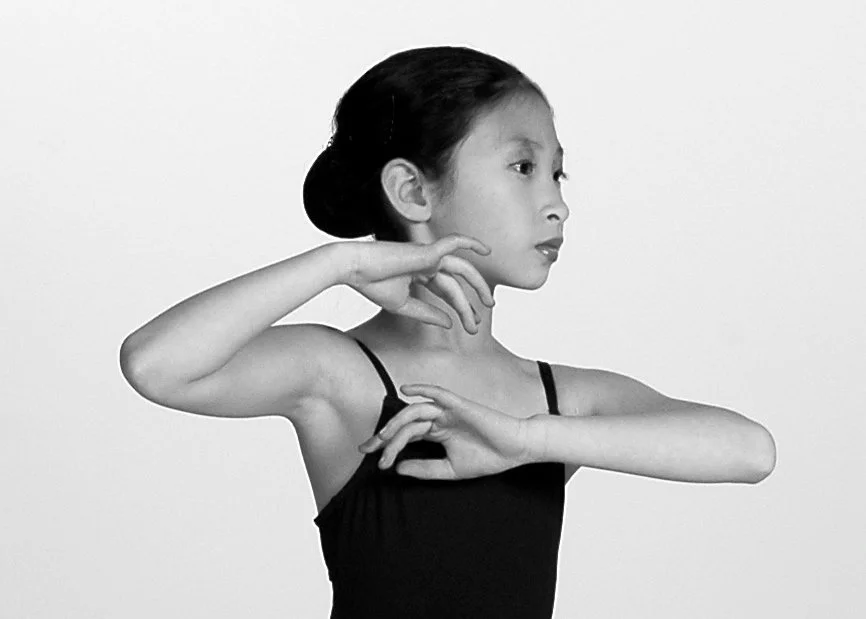
Light Blue leotard (any style)
Pink transition tights
Split sole canvas ballet flats
Light blue or white wrap skirt (optional)
Nude leotard for performances (optional)
Visit our partners at Eurotard Dancewear for all your dance wear needs!
Level III
Typical ages: 8–10 years, depending on readiness
Students build strength, coordination, and stamina while expanding their technical vocabulary. Exercises become longer and more complex, with increasing expectations for independent execution and musical accuracy.
Curriculum
Barre: Plié, tendu, dégagé, rond de jambe à terre, fondu, frappé, développé introduction, petit battement introduction, and grand battement preparation.
Center technique: Tendu and dégagé combinations, port de bras, adagio, balances, and transitions through ballet positions.
Turns: Preparation and introductory single pirouettes from fourth or fifth position, according to readiness; spotting and controlled exits.
Jumps: Échappé sauté, changement, assemblé introduction, glissade, and introductory jeté.
Traveling combinations: Pas de bourrée, glissade, chassé, balancé, and coordinated directional changes.
Adagio: Développé at a manageable height, extensions with proper pelvic alignment, and sustained balances.
Musicality: Understanding counts, accents, phrasing, and changes in dynamics.
Artistry: Coordinating the head, arms, and torso while maintaining clear movement intention.
Learning outcomes: Students perform longer combinations with improved control, demonstrate stronger turnout management, execute introductory turning and jumping vocabulary, and transition more smoothly between movements.
Friday
5:30-6:30 Ballet Technique
6:30-7:30 Jazz/Acro
Saturday
12-1pm Ballet Technique
Dress code:
Black or White leotard (any style)
Pink transition tights
Pink canvas split sole ballet flats
White or black wrap skirt (optional)
Nude leotard for performances
Visit our partners at Eurotard Dancewear for all your dance wear needs!